Sudden cardiac arrest does not discriminate. It can strike anyone — at home, on the sports pitch, in the workplace, or in the middle of a busy street or shopping centre. In Ireland, the statistics are sobering; thousands of people collapse in cardiac arrest each year, and survival depends almost entirely on what happens in the first few minutes.
The Startling Statistics in Ireland
According to the National Ambulance Service Out-of-Hospital Cardiac Arrest Register (OHCAR), Ireland sees approximately 56 cardiac arrest resuscitation attempts per 100,000 people every year. The 2024 OHCAR report places the overall survival rate at just 8% — meaning only 212 of the thousands affected made it home to their families.
| 8%
Out-of-hospital cardiac arrest survival rate in Ireland (OHCAR 2024) |
5,000 People in Ireland die from cardiac arrest each year — 13 every day |
70%+ Of cardiac arrests happen at home, often in front of a loved one
|
The Solution?
Being bystander ready and having access to the right equipment is crucial in an emergency, having a combination of trained individuals on hand with an AED is the ideal in any emergency scenario, so lets take a look at both.
Automated External Defibrillator
What is an Automated External Defibrillator (AED)?
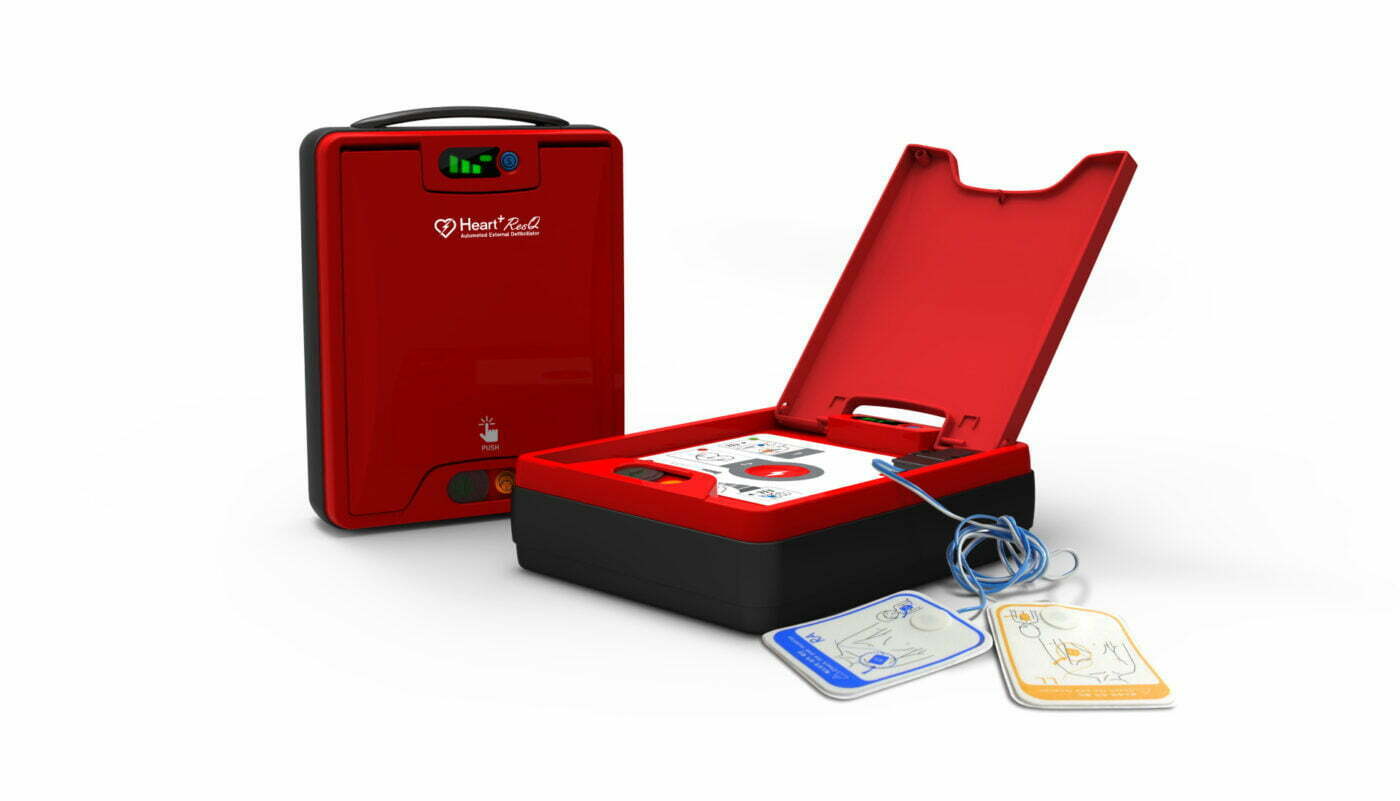
According to the Irish Heart Foundation, “An AED is an Automated External Defibrillator. It is a portable, simple-to-use, computerised device. When someone suffers a sudden cardiac arrest, it delivers a shock to the heart to allow it to resume its normal rhythm.”
Why is Access to an AED Crucial?
During a sudden cardiac arrest, the chances of survival decrease by approximately 10% for every minute that passes without CPR and defibrillation. Emergency medical services may not always be able to reach a casualty within the critical first few minutes, making public access to AEDs essential.
When used promptly alongside CPR, an AED can significantly increase survival rates by restoring a normal heart rhythm before irreversible damage occurs. Ensuring that AEDs are accessible in communities, workplaces, sports facilities, and public spaces can help save lives when time is of the essence.
Types of AEDs
The most commonly encountered AEDs are public-access devices. These are typically installed in fixed locations within the community, such as sports clubs, shopping centres, schools, and community centres.
They are usually stored in clearly marked cabinets designed for quick access in an emergency. The intention is that anyone can retrieve and use the device if a sudden cardiac arrest occurs, ensuring the AED is readily available when every second counts.
The Rural–Urban Divide: Why Portable AEDs Matter
Research from University College Dublin (University College Cork, and University of Galway—based on analysis of over 18,000 cardiac arrests between 2012 and 2020—has highlighted a significant and concerning disparity in outcomes. Survival rates following cardiac arrest are approximately 40% higher in urban areas compared to rural communities. (Cardiac arrest survival rates paper – UCD School of Medicine,)
The primary reason for this gap is access to rapid defibrillation. In rural Ireland, emergency response times are often longer, and fixed-location AEDs stored in cabinets may be too distant to reach within the critical minutes needed to save a life.
This is where portable, carry-everywhere AEDs become essential. They are not simply a matter of convenience, but a potentially life-saving tool that can bridge the gap created by geography and response times.
Encouragingly, survival rates are improving year on year, with recent research indicating an increase of around 14% annually. Portable AEDs are an important part of this progress, helping to ensure that life-saving defibrillation can happen faster, regardless of location.